B-52 Cocktail Recipe: how to Layer the Perfect Shot at Home
Share
A B52 cocktail recipe is a three-layer shot built from coffee liqueur, Irish cream and an orange liqueur such as triple sec, poured in that exact order so each liquid floats on top of the last. Getting it right isn't about luck, it comes down to understanding density and pouring technique, both of which you can learn in one evening at your own bar.
Key Takeaways
- The B-52 is built from three liqueurs poured in order of density, heaviest first, lightest last
- Layering works because liquids with different densities resist mixing when poured gently
- A bar spoon or straw controls the pour and keeps each layer distinct
- Room temperature liqueurs and a steady hand make layering far easier than cold, thin pours
- Once you understand the technique, you can experiment with other layered shots using the same principle
What Is a B52 Cocktail Recipe, Exactly?
A B52 cocktail recipe is a layered shot that stacks coffee liqueur, Irish cream liqueur and orange liqueur in three distinct bands inside a shot glass. It's served straight up, without ice, and drunk in one go or sipped slowly to taste each layer separately.
The shot gets its name from the B-52 bomber, and its visual appeal comes entirely from the layering technique rather than the ingredients themselves. That's actually what makes it such a useful cocktail to study if you want to get better at bartending at home. It's simple enough to attempt on your first try, but precise enough that you'll notice immediately when your technique needs work. If your layers blur together, you'll know the pour was too fast or the liqueurs were too similar in weight. If they stack cleanly, you've just learned a skill that applies to dozens of other layered drinks.
We treat the B52 cocktail recipe as a teaching tool at House of Bols, not just a party trick. Once you understand why it works, you can build your own layered creations with confidence instead of guessing.
B-52 Cocktail Ingredients
The classic B-52 cocktail ingredients are coffee liqueur, Irish cream liqueur, and orange liqueur, each poured in equal parts, typically around 2cl or half an ounce per layer. Three ingredients, three layers, one glass. That's the entire recipe on paper.
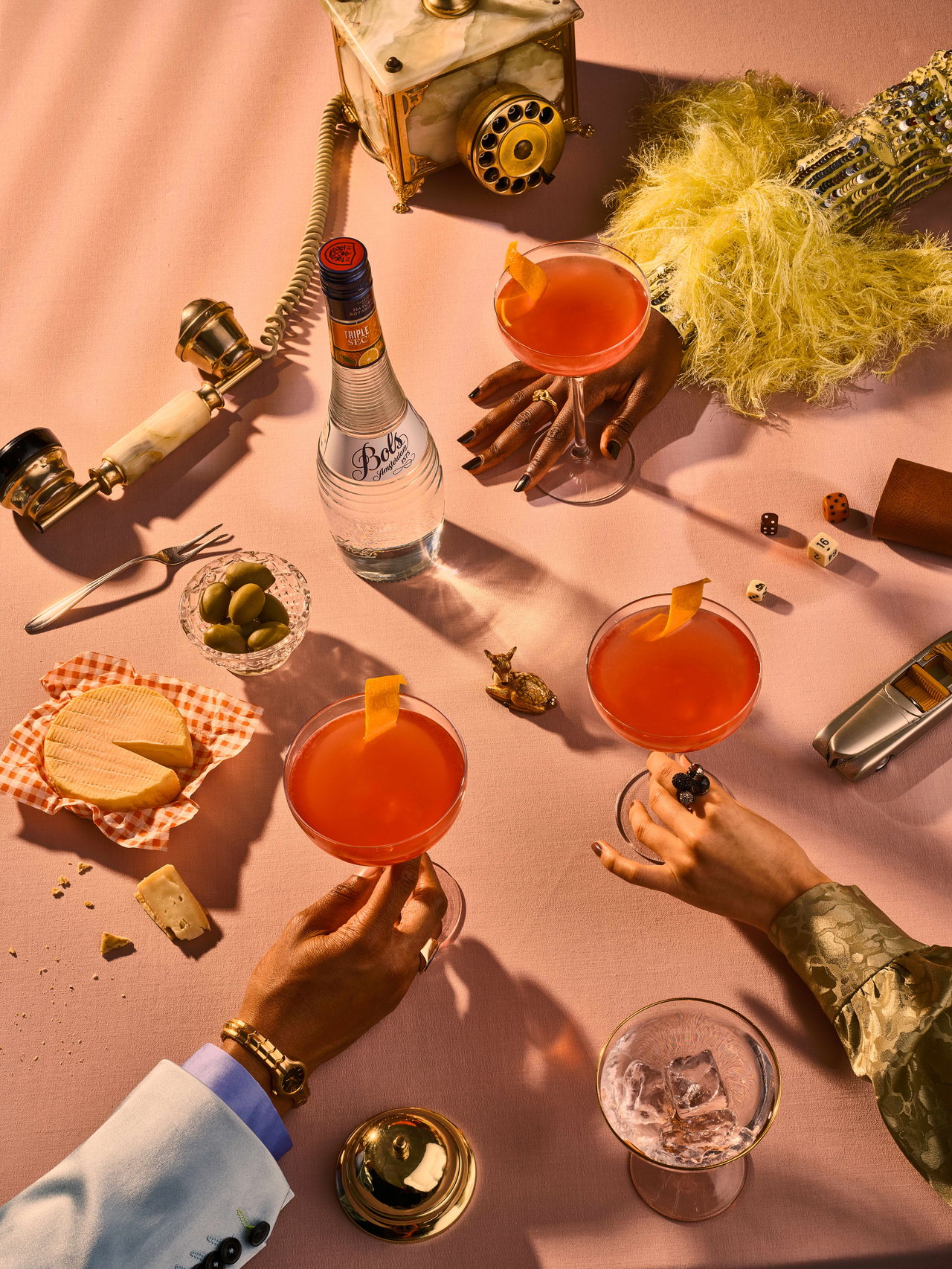
What matters more than the exact brand you choose is understanding what each ingredient contributes. The coffee liqueur brings a heavy, syrupy sweetness and forms your base layer because it's the densest of the three. Irish cream liqueur sits in the middle, both in flavour and in weight, giving the shot its creamy mouthfeel. The orange liqueur finishes things off on top, adding a citrus brightness that cuts through the sweetness underneath. If you want to swap in a classic triple sec for that top layer, Bols Triple Sec Liqueur is a reliable choice that pours cleanly and holds its layer well.
It helps to think of the b 52 cocktail ingredients as three separate decisions rather than one shopping list. Ask yourself what density each liqueur has, what it tastes like on its own, and how it will interact with the layer beneath it. That mindset is what separates a shot that looks accidental from one that looks intentional.
How Does Layering Work?
Layering works because liquids with different densities and sugar content don't mix easily when poured slowly and gently over each other. The denser, usually sweeter liquid sinks and stays at the bottom, while lighter liquids float on top, as long as you don't disturb the surface tension between them.
Density in cocktails is closely tied to sugar content and alcohol percentage. Generally speaking, the sweeter and more syrupy a liqueur is, the denser it will be. Coffee liqueur tends to be thicker and sweeter than orange liqueur, which is why it goes first. This is basic kitchen science applied to a bar tool: the same reason honey sinks in a glass of water and oil floats on top.
Our guide on how to layer a cocktail goes deeper into density tables and pouring angles if you want to build multi-layer drinks beyond three ingredients. For a B52 cocktail recipe specifically, you only need to remember one rule: heaviest at the bottom, lightest on top, and pour so gently that the liquid barely disturbs the layer below it.
Step-by-Step: How to Pour B52 Shot Ingredients
Start by chilling your shot glass slightly, but keep your liqueurs at room temperature. Cold liqueur is thicker and pours more predictably, but very cold ingredients combined with a cold glass can sometimes cause condensation that disrupts your layers, so room temperature bottles usually work best for beginners.
Pour your coffee liqueur first, straight into the bottom of the glass. No spoon needed here since it's going in on its own. Next, take a bar spoon and turn it upside down, resting the back of the spoon just above the surface of the coffee liqueur, angled slightly against the inside of the glass. Slowly pour your Irish cream over the back of the spoon. The spoon breaks the fall of the liquid so it slides gently onto the layer beneath instead of crashing through it.repeat the same process with your orange liqueur on top, using a clean spoon or the same one, wiped if needed.pour slowly. This is the step most people rush, and it's the single biggest reason layers fail.
If you don't own a bar spoon, a straw works almost as well. Insert the straw so its tip sits just above the existing layer, then pour the next liqueur down through the straw. It's a trick worth knowing if you're building your home bar setup gradually. Our cocktail essentials guide covers which tools are actually worth buying first if you're serious about layering technique.
Common Mistakes That Ruin a Layered Shot
The most common mistake is pouring too fast, which sends the new liqueur crashing through the layer below instead of resting gently on top of it. Speed is the enemy of a clean layer, always slow down more than feels necessary.
Another frequent issue is holding the spoon or straw too high above the liquid. Even a centimeter of extra height gives the pour enough force to punch through. Keep the pouring point as close to the surface as you can manage without actually touching it. People also sometimes underestimate how much the order of ingredients matters. If you're unsure whether a substitution will hold its layer, it helps to understand how to build a cocktail from the ground up, since the same logic that governs building drinks in a mixing glass applies to layering them in a shot glass, just with gravity doing more of the work.
For a deeper dive, see learn more about bols blue curacao copy.
Finally, using liqueurs that are too similar in density is a mistake beginners make when they try to improvise. Two liqueurs with barely any difference in sugar content will blend rather than separate, no matter how carefully you pour. This is why the classic B52 cocktail recipe works so reliably: the three liqueurs are chosen specifically because their densities are distinct enough to layer without much fuss.
Variations to Try Once You've Mastered the Base Technique
Once you can pour a clean B-52 without thinking too hard about it, you can start adjusting the recipe to suit your own taste. Some people prefer a flaming version, where the top layer is briefly lit before drinking, though this comes with obvious safety considerations and isn't something to attempt without care and a clear head.
A gentler variation swaps the orange liqueur for a different fruit or herbal liqueur, as long as it's light enough in density to float on the cream layer. If you want to explore other flavour directions, browsing through Bols ingredients is a good way to see which liqueurs pair well by both taste and weight. You could also experiment with a fourth layer, though adding more liquids increases the chance of one layer bleeding into another, so it's worth practicing with three before attempting four.
If you're looking for other quick layered drinks to add to your home bartending repertoire, our piece on cocktails with three ingredients covers a few more combinations that use the same minimal, precise approach as the B-52. And if citrus liqueurs are your thing, it's worth reading about anise flavored spirits used in cocktails too, since layering isn't limited to sweet liqueurs. Bitter and herbal spirits can be layered as well, once you understand their relative densities.
Aviation Cocktail Ingredients: Why This One Belongs in a Different Category
Aviation cocktail ingredients (gin, maraschino liqueur, creme de violette and lemon juice) belong to a completely different style of drink than the B-52. It's a shaken, stirred cocktail served in a coupe glass, not a layered shot, so the pouring technique described in this guide doesn't apply to it.
It's a common point of confusion because both drinks sit under the wider umbrella of classic cocktail recipes, but they solve different problems. The B-52 is about visual layering and density control. An aviation is about balance and dilution through shaking. If you're curious about that drink specifically, our article on flying in style with the aviation cocktail walks through it properly, including why the color and floral notes come from an entirely different set of techniques than layering.
We mention this distinction because search terms for these two drinks sometimes overlap, but the skills you'd practice for one won't transfer directly to the other. If your goal today is learning to layer shots, the aviation is worth exploring separately once you've got the B-52 down.
How Do You Choose Which Glass to Use?
Use a standard shot glass for a B-52, ideally one with straight sides rather than a curved or tapered shape. Straight sides give you a flat, even surface to pour against, which makes it easier to keep each layer level and visible.
A tapered glass isn't impossible to layer in, but the narrowing shape makes your pouring angle trickier to judge, especially for a first attempt. If you're building out your glassware collection and want to know what else is worth having on hand for cocktails beyond shots, our cocktail selector can help you match glass styles to the drinks you're planning to make most often.
Frequently Asked Questions
What is the correct order to pour a B-52 shot?
Pour coffee liqueur first, followed by Irish cream liqueur, and finish with orange liqueur on top. This order follows density, from heaviest to lightest, which is what keeps the layers separate.
Can I make a B52 cocktail recipe without a bar spoon?
Yes, a straw works as a substitute. Hold the straw's tip just above the existing layer and pour the next liqueur down through it slowly to avoid disturbing the layer beneath.
Why do my layers keep mixing together?
This usually happens because you're pouring too fast, holding the spoon or straw too high above the liquid, or using two liqueurs with very similar densities. Slow down the pour and keep the pouring point as close to the surface as possible.
Is a B52 cocktail recipe the same as a B-52 shot?
Yes, the terms are used interchangeably. It's typically served in a shot glass and drunk in one go, though some people sip it slowly to taste each layer.
Can I use different liqueurs to build my own layered shot?
Yes, as long as you understand relative density. Choose a sweet, syrupy liqueur for the base, something in the middle for your second layer, and a lighter liqueur for the top, then apply the same slow-pour technique used in the B-52.