Deep dive into liqueurs: Craft, categories, and modern mixology
Compartir
If you look closely at the evolution of modern cocktail culture, a quiet revolution has taken place on the backbar. For decades, liqueurs were often relegated to the background—viewed simply as sweet modifiers used to take the edge off harsh spirits. Today, they are the architectural foundation of contemporary mixology.
The numbers reflect this fundamental shift. With the global liqueur market projected to reach $168.9 billion by 2030, driven by a steady 3.8% CAGR, it is clear that consumers and professionals alike are elevating their standards. They are no longer asking for a generic splash of color; they want to understand botanical sourcing, extraction methods, and how complex flavor profiles interact in a glass.
When you are evaluating which liqueurs deserve a permanent place in your inventory or home bar, surface-level knowledge isn't enough. You need to understand the science of flavor extraction, the history of botanical craftsmanship, and how these elements translate into the glass. Let's explore the true craft behind premium liqueurs and why mastering them is the key to modern cocktail creation.
The liqueur vs. liquor primer: Understanding the foundation
To build exceptional cocktails, you first need to understand the exact parameters of the ingredients you are working with. The line between "liquor" and "liqueur" is often blurred in casual conversation, but in the professional realm, the distinction is strictly defined by chemistry and international standards.
By EU and EEC legal standards, a spirit can only be classified as a liqueur if it contains a minimum of 100 grams of sugar per liter. But thinking of liqueurs merely as "sweetened spirits" completely misses their functional role. Sugar is a crucial molecular carrier for flavor. It binds to aromatic compounds, stabilizes volatile oils, and provides the necessary viscosity—or mouthfeel—that gives a cocktail its texture and weight.
Premium liqueurs use this sugar content not to mask poor-quality alcohol, but to amplify and preserve the delicate botanical notes extracted during production.
The science of flavor extraction: Distillation vs. maceration
The defining factor between a world-class liqueur and a mediocre one lies entirely in how the flavor is captured. At the highest levels of distilling, flavor extraction is an exacting science of molecular preservation. There are two primary methods used to capture these botanical profiles, and understanding the difference is essential for any serious bartender.
Distillation: capturing the volatiles
Distillation is the process used to capture volatile compounds—the delicate, highly aromatic essential oils that evaporate easily. When botanicals, herbs, or citrus peels are steeped in alcohol and then heated in a still, the alcohol vapors rise, carrying these lightweight aromatic compounds with them. The result is a crystal-clear distillate that is incredibly fragrant but lacks heavy color or tannin.
Maceration: extracting the non-volatiles
Maceration, on the other hand, is a cold-steeping process. Botanicals, fruits, or spices are left to soak in a spirit mixture over an extended period. This process utilizes osmosis to extract non-volatile compounds—the heavier elements like rich colors, deep earthy flavors, organic acids, and natural sugars that cannot travel through vapor.
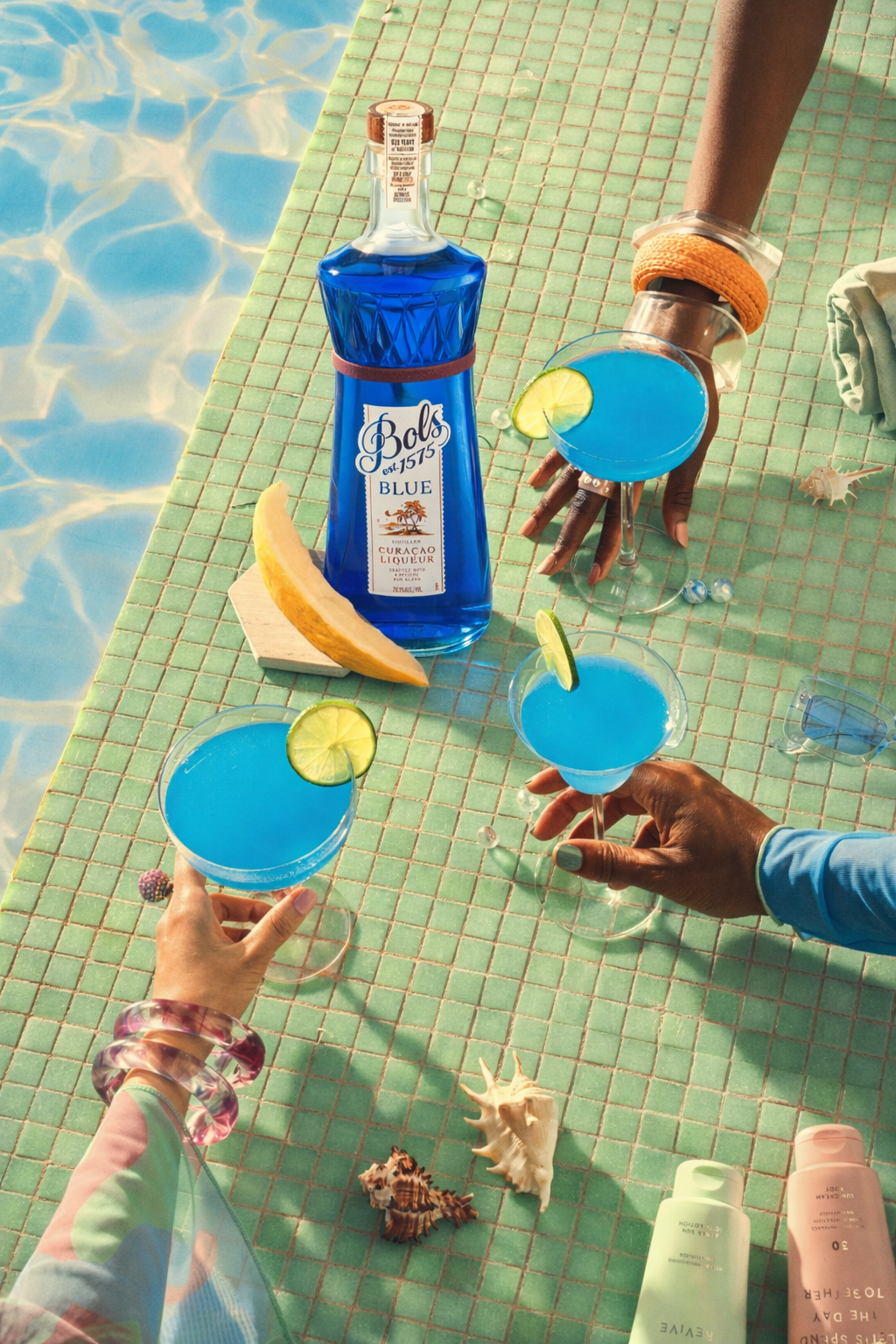
The true art of the liqueur house is knowing exactly which method to apply, or how to blend both. Take Bols Blue Curaçao as a prime example. The signature aromatic complexity doesn't come from artificial flavorings; it comes from the precise distillation of the oils found in Kinnow oranges and Laraha orange peels. Capturing those specific aromatic oils requires a mastery of distillation, while other fruit liqueurs rely on deep maceration to extract rich, jammy fruit solids.
Crafting heritage: From 1575 to the modern backbar
You cannot discuss the mastery of botanical extraction without looking at the historical context that made it possible. Expertise in flavor doesn't happen overnight—it is refined over centuries.
Lucas Bols established the world’s first cocktail brand in Amsterdam in 1575. But the real turning point for liqueur craftsmanship occurred during the 17th-century Dutch Golden Age. Because Amsterdam was the epicenter of the Dutch East India Company (VOC), the Bols family had unprecedented, priority access to a sudden influx of exotic spices, herbs, and fruits arriving from across the globe.
This access transformed the distillery into the world's first true "flavor house." They weren't just producing spirits; they were experimenting with cinnamon, cloves, rose petals, and exotic citrus. This spirit of innovation led to historic breakthroughs, such as the creation of Crème de Ciel in 1912, which eventually evolved into the iconic modern Blue Curaçao. When you pour a premium liqueur today, you are utilizing extraction techniques and botanical recipes that have been stress-tested and perfected over hundreds of years.
Modern mixology: The savory shift and low-ABV movement
The way we use liqueurs is evolving rapidly. According to 2024 trend reports from the Diageo Bar Academy, a massive demographic shift—led heavily by Gen Z—is fundamentally changing cocktail menus.
We are seeing a definitive move away from overly sweet, high-proof drinks toward savory, umami, and Low-ABV (alcohol by volume) profiles. In this new landscape, liqueurs are stepping out of their traditional role as secondary modifiers and becoming the primary structural component of the drink.
Bartenders are increasingly reaching for botanical, herbal, and floral liqueurs—think elderflower, hibiscus, or complex herbal blends—to build intricate flavor bridges without the high alcohol heat. Furthermore, the rise of the Low & No Alcohol movement has created a demand for sophisticated, alcohol-free mixology. This is where brands with deep botanical knowledge excel, applying their centuries of extraction expertise to create zero-proof alternatives, like the Fluère range, that still deliver the mouthfeel and complexity required for high-end mixology.
Mastering the craft: Bridging theory and practice
Understanding the science of maceration and the history of botanicals is the first step. The second is applying that knowledge behind the bar. To truly understand how to balance a master-level cocktail, hands-on education is paramount.
For professionals and passionate enthusiasts looking to translate this botanical knowledge into practical skill, structured education is the most efficient path. The Bols Cocktail Academy in Amsterdam was built specifically for this purpose. Whether you are looking for an entry-level bartender course in Amsterdam to understand the basics, or a Master Mixology course to refine your palate and learn advanced flavor pairing, the Academy provides the bridge between historical craft and modern execution.
For teams, bar managers, or those seeking a highly immersive dive into the world of spirits, experiencing this craft firsthand through the Bols Cocktail Experience offers a tangible look at how a 1575 heritage translates into a modern, premium cocktail environment.
Frequently asked questions (FAQ)
What is the difference between a cheap liqueur and a premium one?
The difference lies entirely in the extraction method and the ingredient source. Cheap liqueurs rely on artificial flavorings, synthetic colors, and heavy commercial sugars to mimic flavors. Premium liqueurs, like those crafted by Bols, use natural botanical extraction (distillation and maceration) to capture real essential oils, utilizing the sugar purely to stabilize the natural flavor compounds.
Does liqueur go bad after opening?
Because of the high sugar content and the alcohol base (which acts as a preservative), most liqueurs have a highly stable shelf life. Fruit-based and herbal liqueurs can last for a year or more after opening if kept in a cool, dark place. Cream-based liqueurs, however, contain dairy and should be refrigerated after opening and consumed within a few months.
How do I use liqueurs in low-ABV or alcohol-free cocktails?
Liqueurs are the secret weapon for low-ABV drinks because they deliver concentrated flavor and heavy mouthfeel—two things often missing when you remove a high-proof base spirit. You can use a botanical liqueur as the base of a spritz, lengthened with soda and tonic, or explore premium alcohol-free spirits that utilize the same traditional distillation techniques to capture flavor without the ethanol.
Where can I learn advanced mixology techniques?
To truly master flavor extraction, balancing, and advanced cocktail creation, professional training is highly recommended. The Bols Cocktail Academy in Amsterdam offers modular training systems, ranging from essential bartending skills to Advanced Master Mixology and International Bar Management, providing industry-recognized education for every skill level.